Shape the future of Christian scholarship through rigorous, supported research.
As an affiliated college of the Australian University of Theology (AUT), Morling College supervises Higher Degree Research candidates who want to contribute meaningfully to theology, ministry and the life of the church. Whether you are exploring a deeply focused biblical project or integrating theology with education, chaplaincy or counselling, you will find a research community that takes both scholarship and spiritual formation seriously.
Join a cohort of HDR candidates who are asking big questions, serving the church and engaging thoughtfully with the world.
As an affiliated college of the Australian University of Theology (AUT), Morling College is able to offer and supervise research degrees in theology and the study of religion. Our vision for research is intentionally integrative. We encourage projects that draw on the strengths of Morling’s faculties in Bible and Theology, Education, Chaplaincy and Counselling.
We are well placed to supervise candidates in established disciplines such as Old Testament, New Testament, Church History, Practical Theology and Christian thought. At the same time we are keen to foster research that brings theology into conversation with lived experience, ministry practice and contemporary culture.
If you are seeking to connect rigorous theological research with the practical dimensions of life, work and ministry, we would be glad to explore Higher Degree Research with you.
Higher Degree Research at Morling is shaped by real questions emerging from churches, classrooms, workplaces and communities. The theses below represent work completed through the Australian University of Theology and supervised at Morling, spanning biblical studies, theology, ministry, ethics, culture and practice.
Together, they illustrate the rich variety of research directions available to HDR candidates. As you explore your own area of interest, Morling’s supervisors will support you in shaping a project that combines scholarly depth with practical relevance.
| Graduate | Conferral year | Degree | Thesis title |
|---|---|---|---|
| Hutton, Erin Martine | 2025 | PhD | Let me hear your voice: How the Song of Songs contributes to the primary prevention of Domestic and Family Violence. |
| Luke, Aidan | 2025 | PhD | Finding joy: Human and Divine Joy in Luke's Parables of the Lost |
| Jones, Grant | 2024 | MTh | God as Creator in the Theology and Rhetoric of Ephesians. |
| Kercher, Warren | 2024 | PhD | How Queensland Baptist Pastors Determine and Justify Their Preferred Preaching Methods |
| Menzies, Gordon | 2024 | MTh | Heteronormativity as Harmony |
| Weerakoon, Kamal | 2023 | PhD | Cultural Hybridity and Covenant Theology: A Practical-Theological Contribution to Reformed Orthodox Missiology |
| Redwood, Christine | 2022 | PhD | Hear Her Voice in the Book of Judges: A dialogue between evangelical preaching and feminist hermeneutics |
| Lowe, David | 2020 | PhD | Matthew 19:9: A deadly exception |
| McKay, Stephen | 2019 | MTh | The trinitarian theology of Particular Baptists in England (1734-1795): Anne Dutton, Benjamin Beddome, Caleb Evans, and Samuel Stennett |
| Hurst, Blake | 2018 | PhD | Evangelical theology at a crossroads: what Alasdair MacIntyre's theory of tradition-guided enquiry has to say to a theological tradition beset by methodological conflict |
| Yu, Devin | 2018 | PhD | Reforming Plantinga's epistemology of faith: a critical synthesis of Bishop's doxastic venture with Plantinga's Reformed epistemology (with special application to the problem of divine absence). |
| Chu, Michael Kwong Wah | 2017 | DMin | 'Drawn together for his glory': The relevance and application of Cultural Intelligence (CQ) to the pastoral leadership of the culturally diverse, congregational, Chinese Churches of Sydney |
| Tan, Carolyn Eng Looi | 2017 | ThD | Exploring cruciform pneumatology |
| Bartlett, Stephen | 2016 | DMin | A study of the effectiveness of church planter identification, development and support systems among Baptist Churches in Australia |
| Harper, Geoffrey | 2016 | PhD | The Rhetorical Function of Allusion to Genesis 1–3 in the Book of Leviticus |
| Batchelder, Caroline Julia | 2015 | ThD | Charging the Earth: Yahweh and the servant in Isaiah 40–55 |
| Hussey, Ian | 2015 | MTh | The soteriological use of kaleo by Paul and Luke. |
| Barker, Kit | 2014 | ThD | Imprecation as divine discourse: speech act theory, dual authorship and theological interpretation. |
| Wesley, Margaret | 2014 | ThD | The family of Jesus and the community of faith in the fourth Gospel |
| Griffin, David | 2013 | ThD | The Word became flesh: a rapprochement of Christian natural law and radical Christological ethics |
| Rader, Marc | 2013 | DMin | Insights from Multi-Source Feedback for the Development of Preachers and Preaching |
| Duncum, Ian | 2012 | DMin | Explore the impact of one model of church consultancy on church health and church growth in NSW/ACT Baptist churches |
| MacBride, Timothy Robert | 2012 | ThD | Preaching the New Testament as rhetoric: the promise of rhetorical criticism for expository preaching |
| Benson, Roderick | 2011 | MTh | Aspects of social responsibility among Baptists in New South Wales 1834–2009. |
| Muhlhan, Brett James | 2011 | ThD | Being Shaped by Freedom: An examination of Luther's development of Christian liberty throughout 1520–1525, with particular reference to his 1520 "De libertate christianae" |
| Li, Pius (Lee Ping) | 2009 | DMin | A Grounded Theory on Conflict Resolution. |
| Foord, Nicholas | 2008 | DMin | Serving "two masters" – the shaping of the ministry of Sydney Anglican School Chaplains |
| Frost, Michael Harvard | 2008 | DMin | In a League of their Own? An Examination and Assessment of the Claim of the Forge Mission Training Network and its Related Emerging Missional Church in Australia. |
| Grice, Vivian Michael | 2008 | DMin | Pastor's Kids: A Study of the Impact upon the Spiritual Belief Systems and Practice of Young Adults Aged 18–35, as a Result of Being the Child of Parents Involved in Pastoral Ministry with Baptist Churches of NSW/ACT. |
| Murphy, Edwina | 2008 | MTh | Spe saluati sumus: Cyprian, Hope and the Christian Life. |
| Hiu, Elim | 2007 | ThD | Regulations concerning Tongues and Prophecy in 1 Corinthians 14:26–40: Are they specific to the Corinthian church or generally applicable to New Testament churches? |
| Burgess, Bruce Charles | 2006 | MTh | A critical analysis of mediation from a Christian perspective in the context of secular approaches |
| Johnson, Philip | 2006 | MTh | Evangelical Responses to New Religious Movements |
| MacBride, Timothy Robert | 2006 | MTh | cavrin !anti; cavrito": Patronage in the Prologue to John's Gospel |
| Clifford, Ross | 2003 | ThD | John Warwick Montgomery's Legal Apologetic: An Apologetic for All Seasons? |
| Higgins, Scott | 1996 | MTh | Woman as the glory of man in the canonical Pauline tradition: an examination of the use of the Creation Stories for male–female relationships in 1 Corinthians 11:3–16, 14:34–35, and 1 Timothy 2:11–15. |
| Bracht, John | 1994 | MTh | The only true church: a critical analysis of the Mormon Church |
| Sloane, Andrew | 1994 | ThD | Wolterstorff, exegetical theorising and interpersonal relationships in Genesis 1–3 |
| Cooper, Stephen | 1991 | MTh | The last judgement as a warning to Disciples in Matthew's Gospel |
| Grice, Vivian | 1991 | MTh | Martin Luther – apocalypticism and the New Testament Apocalypses |
Morling College supervises candidates in two Higher Degrees by Research offered through the Australian University of Theology:
When you become a Higher Degree by Research candidate at Morling College, you enter a rich research environment where your supervisory team walks alongside you from your first proposal through to your final thesis. Morling principal supervisors maintain active research profiles, publish in national and international forums and undertake ongoing professional development in research supervision.
Our faculty have strong publication records across biblical studies, theology, history and practical theology. Below are some of the supervisors available for doctoral candidates at Morling College.
| Supervisor | Specialisations |
|---|---|
Rev Dr David Cohen
Director of Research |
Old Testament; Psalms; Lament |
Rev Dr Ian Hussey
Associate Director of Research |
Homiletics; Ministry and Practice; Christian Life; Church Vitality; Church and Workplace Leadership |
Dr Michael J. Kok
Lecturer in New Testament |
Canonical Gospels; Apocryphal Gospels; Pauline Epistles; Johannine Literature; 1 Peter; Apostolic Fathers; Patristics; Christology; Christian Identity Formation; Jewish-Christian Relations |
Rev Dr Michael D. O’Neil
Lecturer in Christian Thought & History |
Karl Barth; Modern Theology; Ecclesiology; Christian Life; Ethics |
Rev Dr Anthony R. Petterson
Lecturer in Old Testament & Biblical Hebrew |
Book of the Twelve Prophets; Old Testament Prophets |
Rev Dr Andrew Sloane
Dean of Bible & Theology, Lecturer in Old Testament & Christian Thought |
Old Testament; Hermeneutics; Psalms; Ethics; Bioethics; Science and Theology |
Rev Dr David Starling
Vice Principal (Academic), Lecturer in New Testament |
New Testament; Pauline Epistles; Hermeneutics; Theological Method; Systematic Theology |
Dr Nicole Starling
Academic Dean, Lecturer in Church History |
Evangelical History; Australian History; Baptist History; Nineteenth Century Christian History; Biographical Research |
Student Exchange with the Freie Theologische Hochschule (FTH)
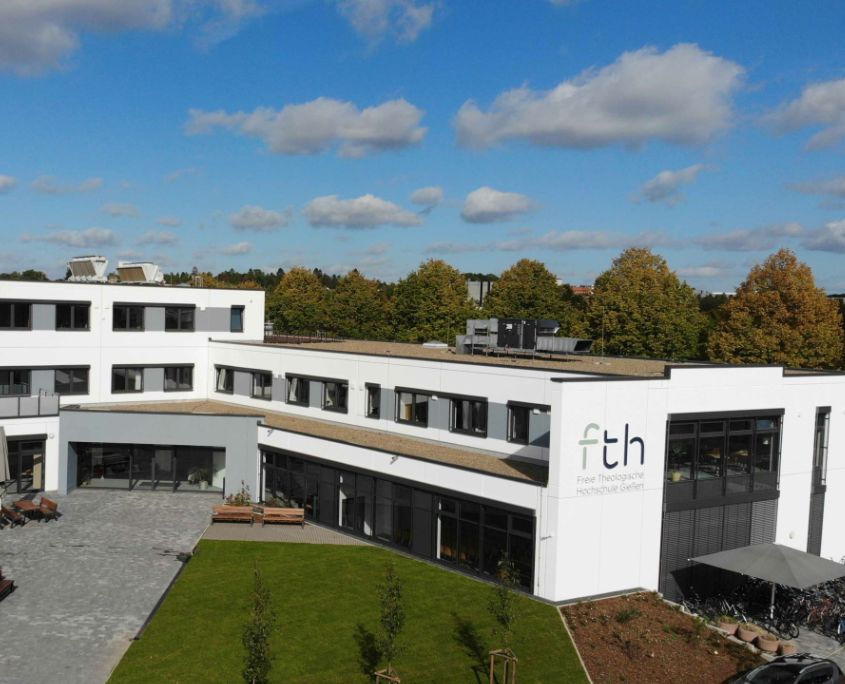
Morling College partners with the Freie Theologische Hochschule (FTH) in Giessen, Germany, offering HDR candidates opportunities for short term research exchange. These visits provide exposure to European scholarship, access to additional resources and the chance to present your work in an international environment. Speak with your supervisor if you would like to explore this pathway.
Freie Theologische Hochschule (FTH) websiteHDR study suits candidates who:
Enjoy sustained reading, thinking and writing
Want to explore a focused research question in depth
Are willing to receive feedback and refine their ideas over time
Can manage their time and commitments responsibly
Desire to serve the church and world through rigorous theological reflection
If this sounds like you, HDR may be a good next step in your academic and ministry journey.
Admission to HDR courses is determined by the Australian University of Theology. In general, applicants must:
Hold appropriate prior theological qualifications at AQF level 8 or above.
Have completed a recognised Research Training Pathway, including a research methods unit and a substantial research project.
Meet discipline specific requirements in areas such as biblical languages for certain fields of research.
Demonstrate sufficient academic achievement to progress to the MTh (Res) or PhD.
Exact requirements for each course are outlined in the AUT admission information and HDR Course Enrolment Policy.
If English is not your first language, you will be required to demonstrate that you meet AUT’s English language proficiency standards for Higher Degree Research. This may involve providing recent test results or evidence of prior study conducted in English. Current requirements are outlined in the AUT English Language Proficiency Policy.
Research degrees involve a significant ongoing commitment. As a general guide:
The Master of Theology (Research) is typically completed within one year of full time study, with a maximum candidature of two and a half years.
The Doctor of Philosophy is typically completed within three years of full time study, with a maximum candidature of six years.
You will need to consider how your study load fits alongside ministry, employment and family responsibilities, and how you will fund tuition and related costs. Eligible candidates may use FEE HELP and apply for scholarships.
The HDR application process is a partnership between you, Morling College and the Australian University of Theology. In most cases you will:
Develop a preliminary research idea in an area aligned with Morling’s supervisory expertise.
Contact Morling for an initial conversation, so we can help you identify a potential supervisor and give feedback on your proposal.
Gather your documentation, including academic transcripts, certified copies of qualifications, identity documents and evidence of English proficiency where required.
Prepare your research outline, indicating your proposed topic, research questions and field of research.
Submit a preliminary application to Morling, who will work with you to finalise your AUT HDR Application Form.
Morling submits your application to the AUT Research Committee for consideration and approval.
If approved, you receive an offer of admission and induction information from AUT and Morling.
Throughout this process, our team will help you understand timelines, forms and next steps.
Overseas Candidates, who are students who would like to come to Australia to study, can undertake HDR through AUT at selected delivery locations. Overseas students are normally enrolled full time and must meet the conditions of their student visa, including progress and attendance requirements.
Offshore Candidates who intend to primarily reside outside Australia for most of their candidature may also be considered, provided that appropriate supervision, resources and local support can be arranged. In some cases, off shore candidates may be required to attend short research intensives for one to two weeks in Australia.
Definitions:
"Overseas Candidates" are students who come to Australia to do their study.
"Offshore Candidates," study primarily outside Australia, but visit Australia during their candidature, typically for one to two weeks each year during their candidature.
You do not need a fully developed proposal before you get in touch. If you are exploring the possibility of Higher Degree Research and would like to discuss potential topics, supervision or entry pathways, our team would be glad to hear from you.
Share a brief overview of your background and research interests, and we will help you consider next steps.
If you have already discussed your research idea with a potential supervisor, or you are confident that you meet the entry requirements, you can start the formal process by completing our preliminary application form.
We will review your information, confirm supervision possibilities and guide you through preparing your full AUT HDR application.
We've compiled answers to some of the most common queries about our HDR courses, application process, fees, and resources. Whether you're exploring your study options or preparing to apply, you'll find helpful information here. If you have further questions, don’t hesitate to reach out!
If you wish to proceed to Higher Degree Research with Morling College but do not currently meet the academic requirements, you may be able to complete prerequisite study first. Many candidates build their Research Training Pathway through awards such as the Graduate Diploma of Divinity or the Master of Theological Studies. Our team can help you identify which units you may need and how they can contribute to future HDR admission.
Tuition fees for Higher Degree Research are set by the Australian University of Theology and are published on our Fees page. Eligible candidates may be able to defer tuition fees through FEE HELP. We recommend checking the most recent fee schedule and speaking with our team if you have questions about payment options.
Yes. Morling College offers a range of scholarships that may be available to HDR candidates, subject to eligibility and availability. In addition, PhD candidates may be able to apply for AUT scholarships, including partial tuition support. Scholarship information, criteria and closing dates are published each year. Because applications require support from your proposed supervisor and home college, it is important to allow sufficient time for internal approvals before the published deadline.
HDR courses offered through AUT are available to overseas students at selected delivery locations and are normally undertaken in full time mode. Overseas students must meet Australian Government requirements for student visas, including academic progress expectations. Further information is available on the AUT Overseas Students page, and our team can help you understand what this means for your situation.
As an HDR candidate you will participate in induction activities, supervision meetings, research skills sessions and seminars. You will receive guidance on milestones such as Confirmation of Candidature, ethics approval (where needed) and annual progress reporting. Morling and AUT also provide access to library resources, student support services and policies relating to wellbeing, leave, suspension and extension of candidature.